
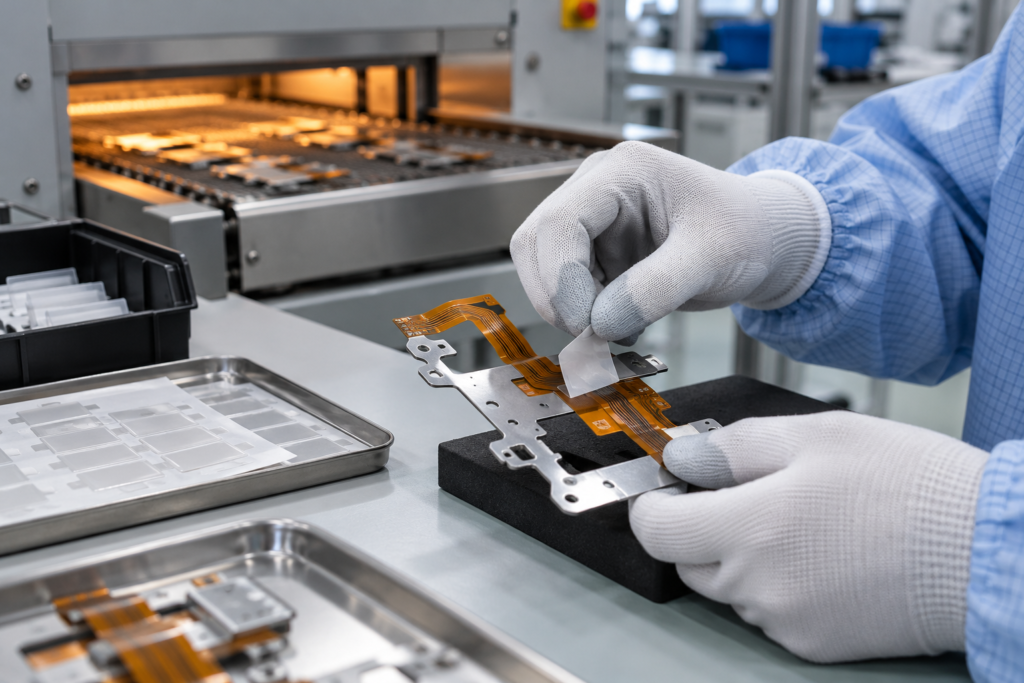
Can the selected double-sided PET tape remain in the assembly through our heat-intensive process, and what evidence is needed before release?
Only qualify pre-process bonding when the exact proposed construction passes a representative assembly profile against buyer-defined post-process criteria. If that evidence is unavailable, bond after the thermal step or hold the design.
figures and test-method references in this guide are for preliminary selection only. Final performance depends on the exact construction, thickness, substrate, application and test method; request the report for the proposed grade before approval.
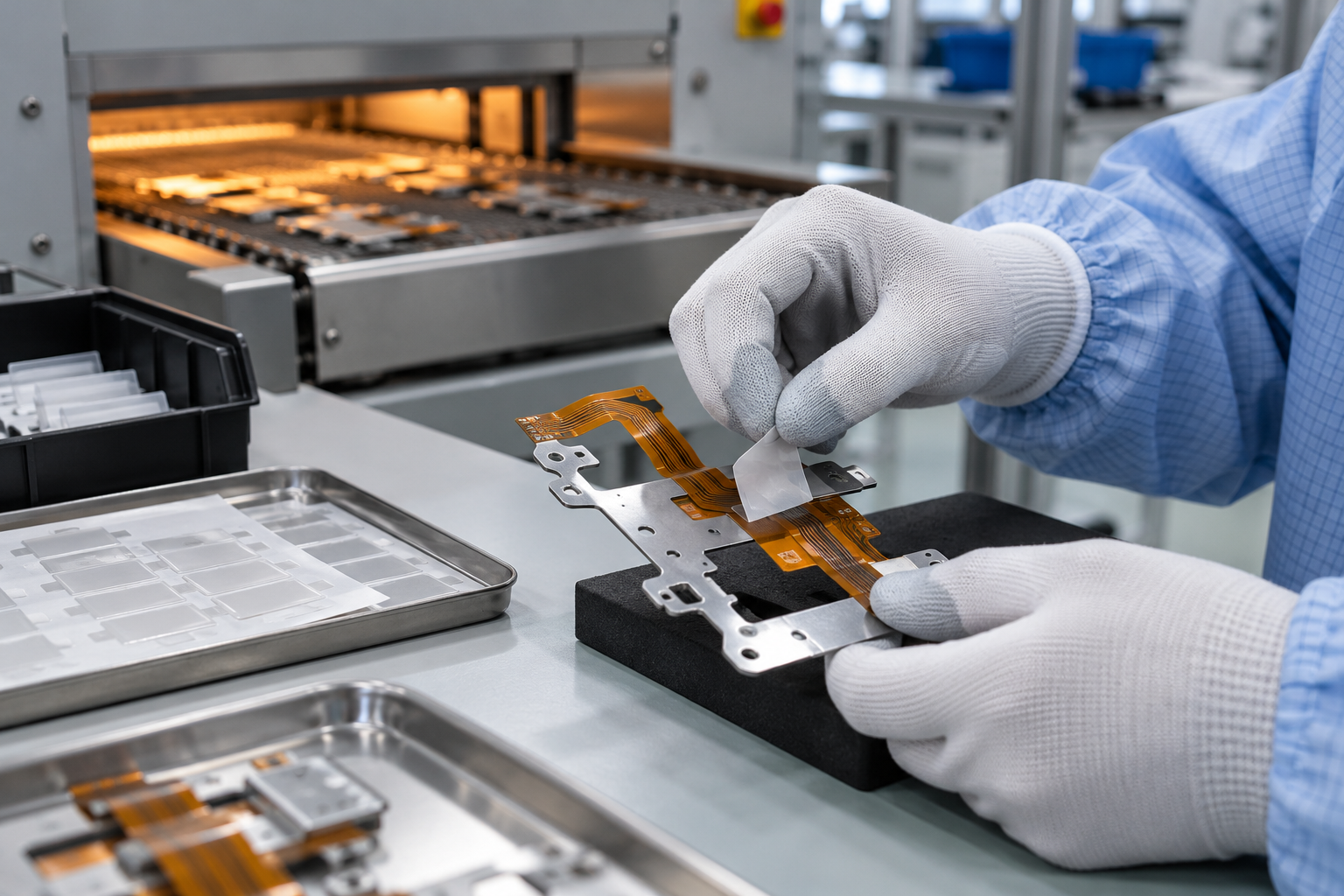
Only qualify pre-process bonding when the exact proposed construction passes a representative assembly profile against buyer-defined post-process criteria. If that evidence is unavailable, bond after the thermal step or hold the design. A family name or peak-temperature figure from another product does not establish approval. The search phrase high temperature double sided tape often compresses these distinct questions into one label. If grade-matched evidence is not available, apply the tape after the thermal step when the design permits, or hold the process release until a representative trial is complete.
That is a process-sequencing decision, not simply a material lookup. A double-sided PET tape joint includes the adhesive layers, carrier, release liner, substrates, bond geometry and application method. Heating can affect those parts differently. The relevant question is whether the assembly, in the state and sequence used in production, still performs its intended job after the actual cycle.
Decide whether the tape is applied before or after heat
Start by writing down what the tape must do and when the bond is formed. If the tape is attached before reflow, the bonded interface experiences the thermal process. If the component can be attached after soldering or another hot operation, the tape may avoid that exposure, but the later assembly sequence must still provide access, alignment and pressure for a reliable bond. Neither route is automatically correct; the process layout and design requirements determine the candidate sequence.
For a pre-process route, require evidence tied to the exact grade and revision being quoted. The report or sample plan should identify the adhesive construction, PET carrier, liner, thickness, substrate finishes and bond area. It should also say whether the liner remains in place during the heat step, whether the tape is already bonded, and what fixture or load is present. A test on loose tape or a different stack may answer a different question from the OEM’s assembled part.
If a supplier provides only a family description or a broad temperature range, treat it as a screening clue. LubandArt’s PET tape product page lists a typical family range and asks buyers to share the thermal profile for selected grades intended for reflow or selective wave solder. That is a route to discuss a candidate; the public page does not publish a grade-specific result that approves a particular assembly.
Capture the thermal profile the part actually sees
Do not qualify a tape using only the oven set point. Record the temperature measured at or near the part, peak temperature, time at relevant temperature, ramp and cooling behavior, number of passes, and any rework cycle. Include the location of the bond in the assembly, the board or bracket mass, fixture contact, shielding, nearby components and the orientation of the part. If a process contains several thermal stages, document which occur before and after bonding.
The sample should use the proposed tape construction and the production substrates or a justified representative pair. Surface finish matters: bare metal, coated metal, solder mask, polyimide and other surfaces can create different interfaces. Record cleaning and preparation, application pressure, time between bonding and heating, conditioning, and whether a release liner or temporary carrier is present. These details make a result interpretable and repeatable; they do not guarantee a pass.
A manufacturer example illustrates why the conditions must stay attached to the numbers. The 3M 9077 technical data sheet describes a specific product and reports its own thermal properties and reflow example. Those values belong to 3M 9077’s construction and stated test conditions. They are not a specification for LubandArt PET tape, nor proof that another tape will pass the reader’s line.
Separate process exposure from service temperature
A continuous service-temperature range answers how a product is described for ongoing use under its stated conditions. A short process excursion asks whether a particular construction and bonded assembly tolerate a defined peak, dwell and cycle. The reverse is also true: surviving one brief thermal cycle does not establish long-term performance at elevated service temperature. Keep these requirements separate in the material specification and qualification record.
Also distinguish carrier behavior from bond performance. The PET film may remain dimensionally intact while the adhesive softens, shifts or loses retention. A liner may release, wrinkle or contaminate adjacent surfaces even if the bonded tape remains attached. Conversely, a value reported for liner stability does not prove that the joint holds the part. Inspect the whole finished assembly and define which layer or failure mode is relevant to the design.
Set acceptance criteria before running samples
Agree on pass/fail criteria before exposure. Depending on the assembly, record whether the part moved, whether an edge lifted, whether adhesive squeezed out or left residue, and whether adjacent surfaces or components were contaminated. If retention is critical, select a buyer-approved peel, shear, pull or functional test that matches the load direction and geometry. Record the test method, conditioning time after cooling, sample count and any destructive inspection. A coupon test can help compare candidates, but the production-representative part should confirm the release decision.
Do not invent a universal peel-strength threshold for all assemblies. The required value depends on part mass, dynamic loads, joint area, safety role, environment and the buyer’s reliability plan. Where failure has a safety or regulatory consequence, use the buyer’s qualified engineering process and any applicable product-level requirements. Public tape-family information is not a substitute for that approval.
The release record should identify the exact tape grade and revision, sample or lot, substrates, preparation, application sequence, complete thermal profile, liner state, post-cycle observations, measured results and acceptance decision. If any of those change—especially adhesive construction, substrate coating, cycle profile or bond geometry—assess whether the qualification must be repeated. This keeps future production tied to the same evidence as the approved sample.
Use a simple release gate
Use pre-process bonding only when the proposed construction has a documented, representative pass against criteria set by the buyer. If the evidence covers a different grade, only a loose material, or an incomplete profile, the decision remains open. In that case, first consider applying the tape after the hot operation. If sequence cannot change, run a controlled sample trial and keep production on hold until results are reviewed.
This approach avoids two costly shortcuts: assuming that a carrier name guarantees heat resistance, and treating one peak number as a complete application approval. For related context, see what a service temperature rating does and does not mean; that article discusses PE foam, not PET reflow qualification. Use the blog index to find adjacent material and application guides.
Next step for a tape review
To assess a proposed construction, send the part or bond-area drawing, substrate and finish, thermal profile measured at the assembly, number of passes, liner state, application sequence, target volume and buyer acceptance criteria through the contact page. The product family can help identify a candidate; only grade-matched evidence and representative testing can support the buyer’s release decision.
Frequently Asked Questions
Does a PET tape service-temperature range qualify it for SMT reflow?
No. A continuous service range is not evidence that a specific construction survives a transient assembly profile. Require a representative test for the exact proposed tape and part.
Can a release liner’s reflow result prove the bonded joint is qualified?
No. Liner behavior is only one part of the stack. Inspect and test the adhesive bond, carrier, substrates and finished assembly against the buyer’s criteria.
What if no grade-specific thermal report is available?
Do not assume pre-process use is approved. Apply the tape after the heat step where the process permits, or hold release until a representative sample trial passes agreed criteria.
Send the exact assembly thermal profile, substrate/finish, stack-up, tape-application sequence and required post-cycle criteria for a proposed sample review.
Request a quote · [email protected] · WhatsApp +86 180 6469 2463
Need this construction for a production run?
Get a quote