
Short answer: choose PE foam tape when the joint needs gap filling, sealing or cushioning on uneven surfaces at moderate temperatures (up to 90 °C) and you want the lowest cost; choose acrylic foam tape when you need a structural bond between dissimilar materials that must survive higher temperatures, outdoor UV and thermal movement. They are not “better or worse” — they solve different joints. The rest of this guide shows exactly where each one wins.
PE foam tape vs acrylic foam tape at a glance
| Property | PE Foam Tape (LubandArt verified) | Acrylic Foam Tape (construction class) |
|---|---|---|
| Core material | Closed-cell PE foam | Viscoelastic acrylic foam |
| Thickness range | 0.5 – 8.0 mm | Typically thinner, single-construction profiles |
| Service temperature | −30 °C to 90 °C | Generally higher continuous temperature; suited to outdoor / thermal-cycle duty |
| Gap fill & cushioning | Strong — compressible closed-cell foam seals uneven surfaces | Moderate — conforms, but engineered more for structural hold |
| Bond type | Seal / cushion / light fix | Structural bond of dissimilar substrates |
| Outdoor / UV | Indoor and light outdoor sealing | Better long-term UV and weathering resistance |
| Cost posture | Lower | Higher |
| Typical uses | Automotive weatherstrip, curtain-wall gap fill, mirror & sign mounting, appliance panel fixing | Sign faces, exterior trim, dissimilar-substrate structural assembly |
LubandArt’s verified foam line is PE foam tape; the acrylic-foam column above describes the tape class so you can weigh both before discussing your joint with our engineering team. (LubandArt’s cataloged acrylic-family product is a thin acrylic film tape, not a foam core — see acrylic foam tape for signage for class background.)
How to choose: selection guidance
- Choose PE foam tape if the joint has a visible gap or uneven surfaces, service temperature stays within −30 °C to 90 °C, and the priority is sealing, dust/water resistance or cushioning at the lowest cost. Check the PE foam tape specs →
- Choose acrylic foam tape if you are bonding two different materials (for example aluminium to acrylic) that expand at different rates, the assembly sees outdoor sun, wind load or higher heat, and you need a permanent structural hold rather than a seal.
- Still unsure on thickness? Read foam tape thickness selection before requesting samples.
Application guidance
Where PE foam tape fits (LubandArt verified applications)
- Automotive weatherstrips and sealing strips
- Building curtain-wall gap filling and façade trim
- Mirror and sign mounting on glass, metal and painted surfaces
- Appliance panel fixing and door-gasket bonding
These come from LubandArt’s PE foam tape product data — the closed-cell foam gives water/dust sealing and shock absorption, and the acrylic pressure-sensitive adhesive grips glass and metal well.
Where acrylic foam tape is the usual pick
- Outdoor sign faces and channel letters subject to wind and UV
- Automotive exterior trim on painted surfaces
- Structural assembly of dissimilar materials with thermal movement
Related reading
- PE foam vs EVA foam tape — another foam-choice comparison
- Foam tape thickness: sizing the gap
- Acrylic foam tape for signage
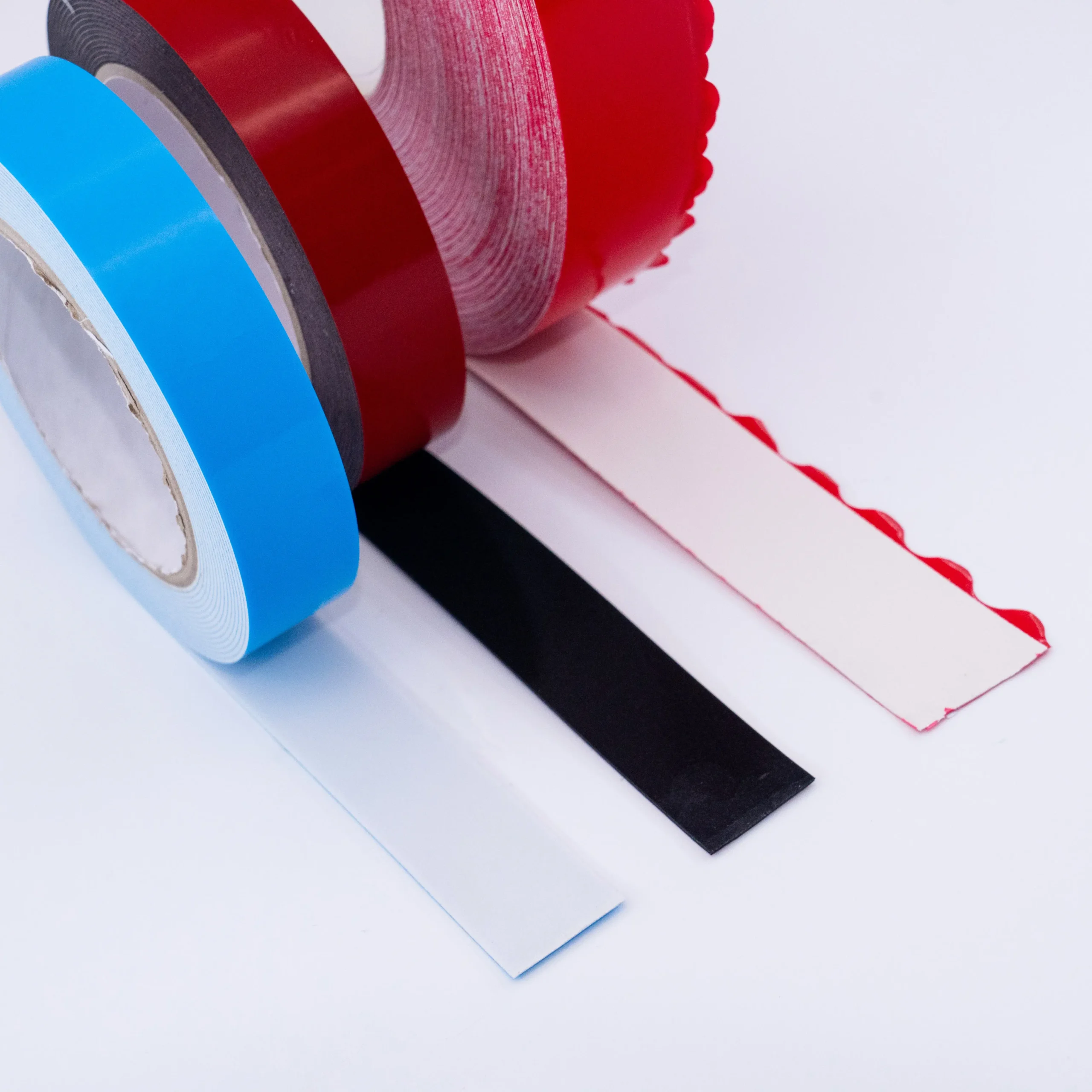
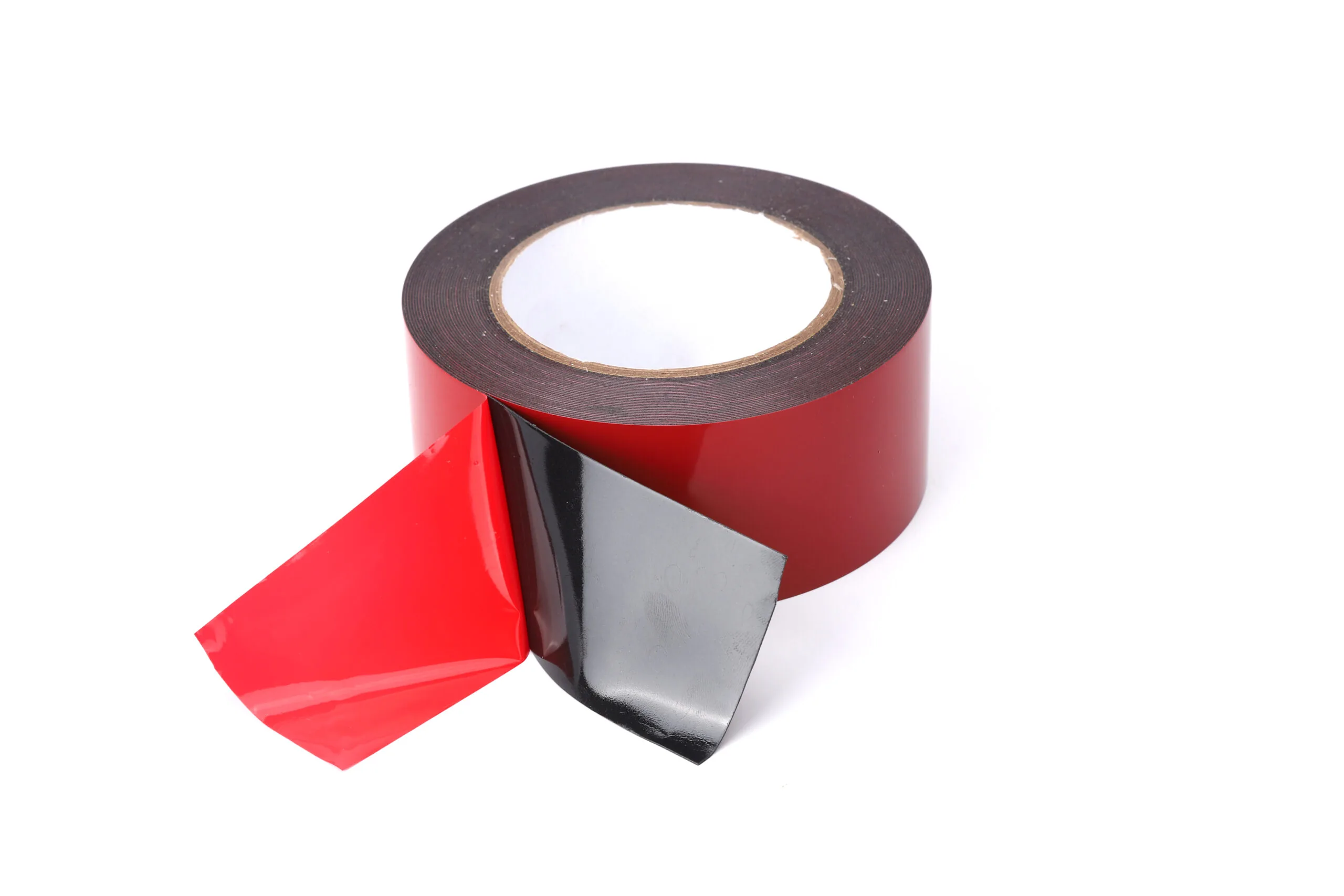
Applications in Focus
Frequently Asked Questions
What temperature can PE foam tape handle?
LubandArt PE foam tape is rated for continuous service from −30 °C to 90 °C. For joints above that range, or with heavy outdoor UV, an acrylic foam tape or another high-temperature construction should be considered.
Is PE foam tape waterproof?
For sealing purposes, yes. The closed-cell PE foam structure blocks water and dust, which is why it is used for automotive weatherstrips and curtain-wall gap filling. It is a seal-and-cushion tape, not a structural bond.
PE foam tape or acrylic foam tape — which is stronger?
They are strong in different ways. PE foam tape excels at gap filling, sealing and cushioning at moderate temperature and lower cost. Acrylic foam tape is built for structural bonding of dissimilar materials with higher temperature and UV resistance. Which is “stronger” depends on whether your joint needs a seal or a structural hold.
Can LubandArt supply acrylic foam tape?
LubandArt’s verified foam product line is PE foam tape (specs above). Acrylic foam tape can be specified to requirement — share your substrate, temperature and load case with our engineering team and we will match a construction.
Need this construction for a production run?
Get a quote