
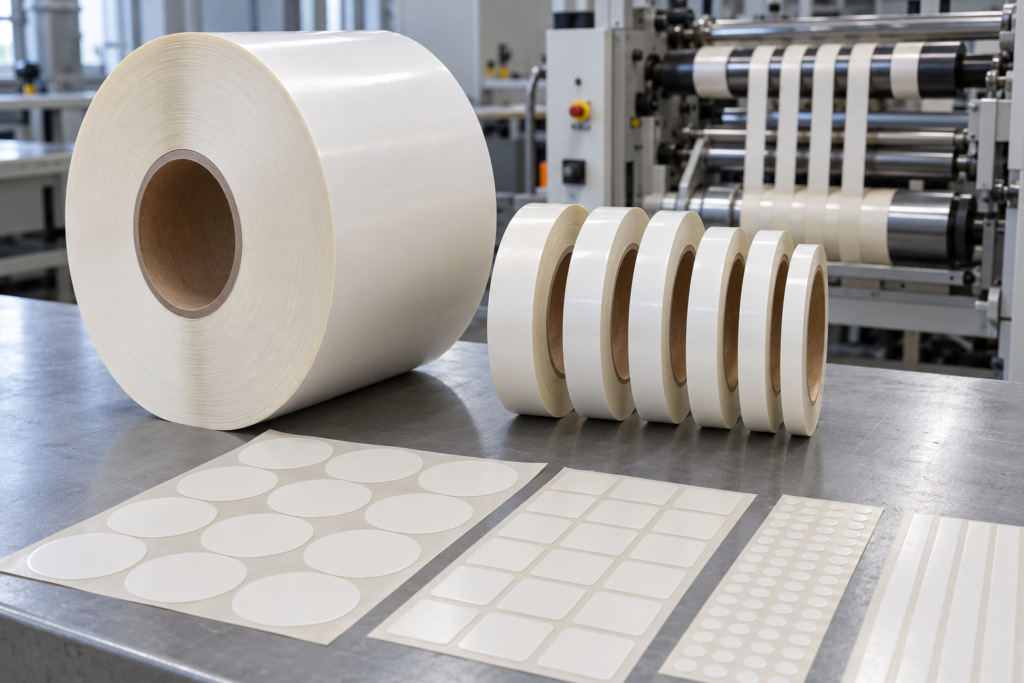
How should a buyer choose between jumbo roll, slit roll and die-cut tape parts?
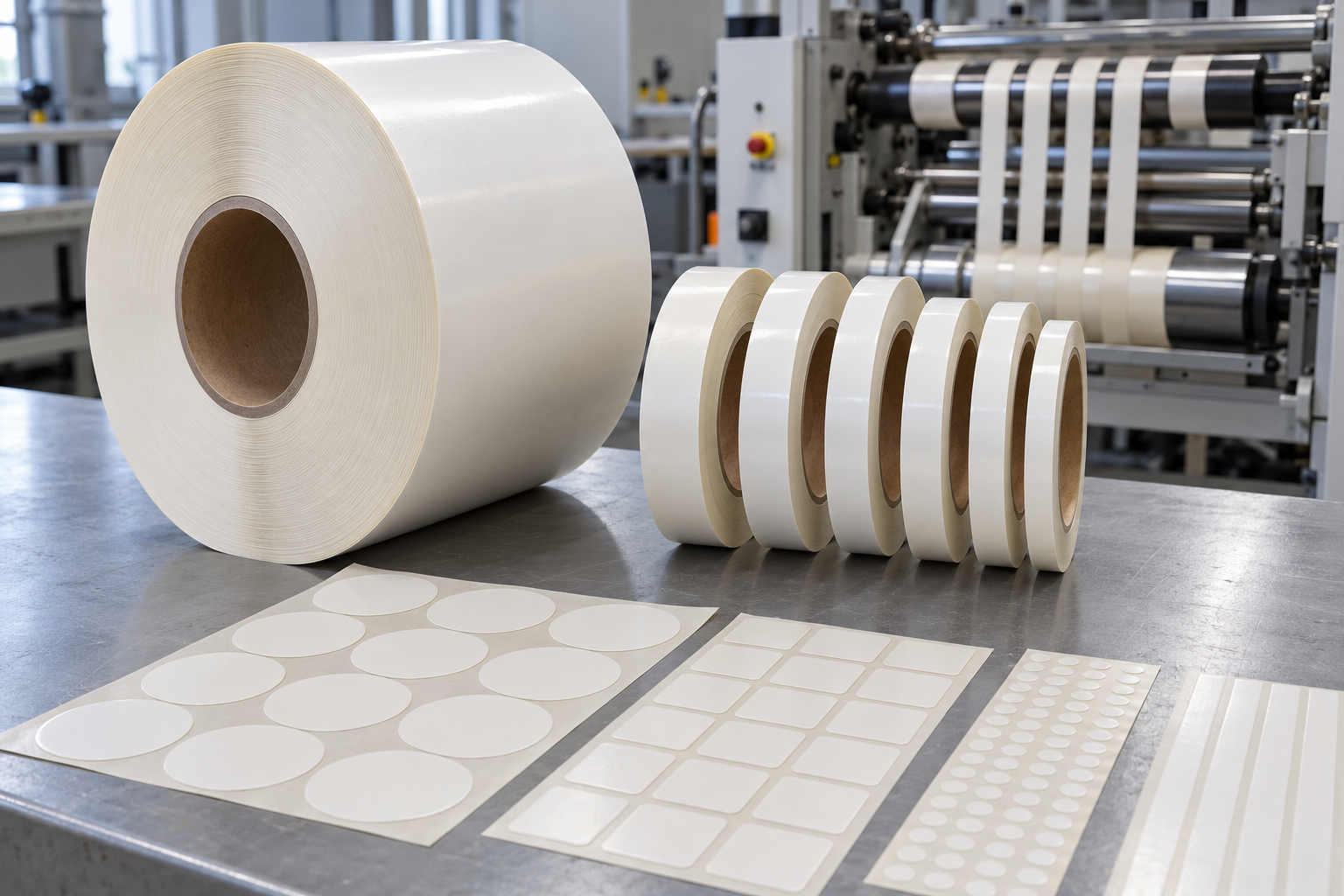
Choose the least-complex format that meets the application geometry and production controls, then confirm the exact format and quoted scope with a representative trial.
Selection guidance only. Current evidence does not establish universal cost, tolerance, yield, MOQ, lead time or LubandArt converting capability. Confirm the exact grade, format, dimensions and commercial terms in writing before approval.
Start with the format decision, not a presumed cost winner
A tape buyer choosing between a jumbo roll, a slit-and-rewound roll, and finished die-cut parts is making a make-or-buy and line-integration decision. The best format depends on what the plant can convert and apply reliably, the part geometry, liner handling, annual demand, changeovers, inspection plan, and the exact construction being quoted. A larger roll is not automatically cheaper after freight, storage, scrap, labor, and conversion are counted. A finished part is not automatically more consistent unless its drawing, tolerances, liner presentation, and acceptance criteria are defined.
Use a jumbo roll when the buyer has suitable slitting or converting equipment, controls the process, and can manage the resulting widths, lengths, roll handling, and quality checks. Consider slit rolls when the production line needs specific widths and lengths but can still apply tape from a roll. Consider die-cut parts when the application requires a defined shape, repeatable placement, a tab or liner feature, or a form that operators or automation can present consistently. These are screening rules, not universal product claims. Confirm that the exact tape family and grade can be supplied in the requested format.
The OPP tape, tissue tape, PET tape, and PE foam tape pages identify product families and selected supply formats. They do not establish every possible width, tolerance, die-cut geometry, liner configuration, or production limit. Ask for project-specific confirmation before setting a drawing or release specification.
Compare the real work at each step
For a jumbo roll, map the downstream work: slit width, rewind tension, roll diameter, core, edge quality, splice policy, winding direction, storage, and inspection. Confirm who owns each operation and how defects are detected before the roll reaches the application line. A jumbo format can shift conversion work and process control to the buyer; the commercial quote should make that responsibility explicit.
A slit roll can reduce in-house slitting work while retaining roll-fed application. Specify finished width, length, core ID, maximum OD, unwind direction, splice limits, liner, label information, and packaging. If the line uses a sensor, applicator, or automatic splice handling, provide those interface requirements. Confirm roll-to-roll consistency through samples and an agreed inspection plan rather than assuming that a nominal width alone describes fit.
Die-cut parts can help when the bond area has a specific shape or when hand placement is difficult to repeat. The buyer should supply a dimensioned drawing, identify critical dimensions and tolerances, and define how the part is presented: individual pieces, matrix or sheet, roll format, tabs, liner split, or another agreed configuration. Check whether the part can be removed cleanly without stretching, tearing, adhesive transfer, or loss of placement accuracy. A drawing should also state the inspection method and sampling frequency. Avoid specifying a tight tolerance until the converter confirms feasibility for that exact material stack and geometry.
Converting references from other suppliers can help explain operations such as slitting, rewinding, and die cutting, but they do not prove another supplier’s capabilities. For example, tesa’s converting overview is context for converting as a process; it is not evidence of LubandArt’s equipment, tolerances, or capacity. The 3M Converter Markets Selection Guide is also a supplier-specific selection resource. Keep capability confirmation, tolerances, and quotation terms tied to the proposed LubandArt grade and order.
Use a total-work comparison
Compare the formats using a common production basis: annual good parts or applications, not just meters of tape. Include material price, conversion charges, freight, inventory space, minimum order quantity, changeover labor, line speed, scrap, inspection effort, packaging, and the cost of a line interruption. Request a quote for each realistic format using the same grade, annual volume, delivery locations, and acceptance requirements. If a quote omits a charge or assumes a different liner or core, the numbers are not comparable.
Then run a production-representative trial. Include the actual substrate, surface preparation, application pressure, line speed, ambient conditions, dwell, liner removal, and part placement. Record output rate, misfeeds, liner breaks, edge lift, placement errors, scrap, and changeover time. For die-cut parts, verify dimensions and dispensing. For rolls, verify unwind and application behavior across the roll, not only a short hand-applied sample. The buyer should set pass limits before testing and repeat the trial across representative lots when incoming variation matters.
Choose the simplest format that meets the process need
A useful decision sequence is: first, establish whether the buyer has controlled conversion equipment and who owns conversion quality. Second, define the application geometry and how the tape must be presented. Third, list the line interfaces and quality checks. Fourth, request comparable quotes and samples for only the feasible formats. Finally, compare trial results and landed cost using the same demand and acceptance assumptions. Keep the chosen format, grade, liner, dimensions, tolerances, packaging, and change-control rules in the purchase specification.
For an RFQ, provide the product family and proposed grade if known, drawing and critical tolerances, roll width and length or part geometry, core and maximum roll diameter, liner and finger-lift requirements, application method, line speed, changeover frequency, annual demand, scrap limits, incoming inspection plan, and destination. Ask the supplier to confirm feasible format limits, sample availability, MOQ, lead time, and any conversion charges in the quotation. These commercial values should be confirmed for the specific order, not inferred from a product family page.
The practical answer is to select a jumbo roll when in-house conversion is controlled and economical on a total-work basis; select slit rolls when roll-fed application is needed but custom widths or lengths remove buyer-side slitting; and select die-cut parts when geometry or presentation benefits from a finished shape and its tolerance can be verified. If the available evidence does not show that the proposed format meets the line and drawing, keep the choice provisional and run a sample trial before release. The LubandArt contact page can be used to submit the drawing and production requirements for a project-specific format review.
jumbo roll, slit roll and die-cut tape supply format
industrial adhesive tape supply format
The lowest-risk supply format depends on conversion ownership and a production-representative fit check; no format is universally cheaper.
tesa describes examples of die-cut presentation features such as finger lifts and slitted liners.
3M states its technical data should be considered representative or typical and not used for specification purposes.
LubandArt product pages list selected product family supply formats but do not set universal tolerances or project capability.
Specify dimensions, core, OD, unwind, splice and liner interface.
Drawing, critical dimensions, presentation and inspection must be agreed.
Use comparable landed cost and work per good application, including conversion, inventory, labor and scrap.
Include drawing, grade, format, line, demand and acceptance limits; ask for project-specific feasibility and quote.
jumbo roll slit roll die cut tape supply format describes the jumbo roll slit roll die cut tape supply format choice. Choose the least-complex format that meets the application geometry and production controls, then confirm the exact format and quoted scope with a representative trial.
send the drawing and production requirements
Frequently Asked Questions
Is a jumbo roll always the lowest-cost option?
No. Compare conversion labor, equipment, freight, inventory, scrap, QC and interruptions using the same annual good-output basis.
Does a product page guarantee a requested die-cut tolerance?
No. Product pages list selected formats; confirm the exact drawing, stack and tolerance in writing for the proposed grade.
What information should accompany a tape-format RFQ?
Send the drawing, grade, format dimensions, liner, line speed, demand, QC and acceptance limits, and request quoted feasibility, MOQ and lead time.
Send a dimensioned drawing, tape family/grade, requested format, liner and line interface, annual demand and acceptance criteria for project-specific feasibility and quotation.
Request a quote · [email protected] · WhatsApp +86 180 6469 2463
Need this construction for a production run?
Get a quote